Choosing a Wallet Type in Liana: Understanding Your Inheritance Options
Introduction to approaching inheritance planning in Liana Wallet
Abhilash S Nair
January 29, 2026

Most people who buy Bitcoin think about how to keep it safe today. Fewer think about a harder question: what happens to it if something happens to you?
This is where Bitcoin inheritance planning comes in—and where wallets like Liana offer thoughtful choices.
When you create a wallet in Liana, you’ll see three options. Each reflects a different way of balancing control, safety, and future access.
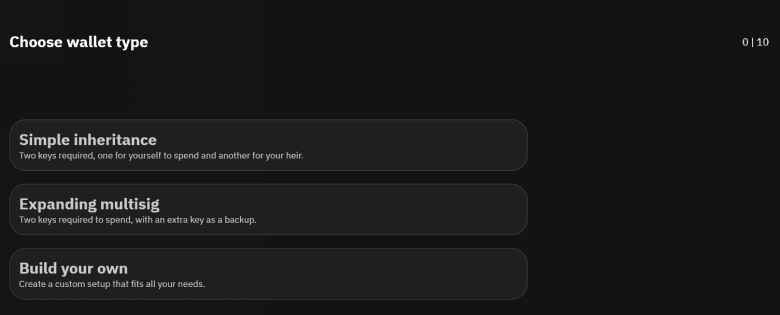
Let’s get an overview of the three options.
1. Simple Inheritance
“One key for you, one key for your heir.”
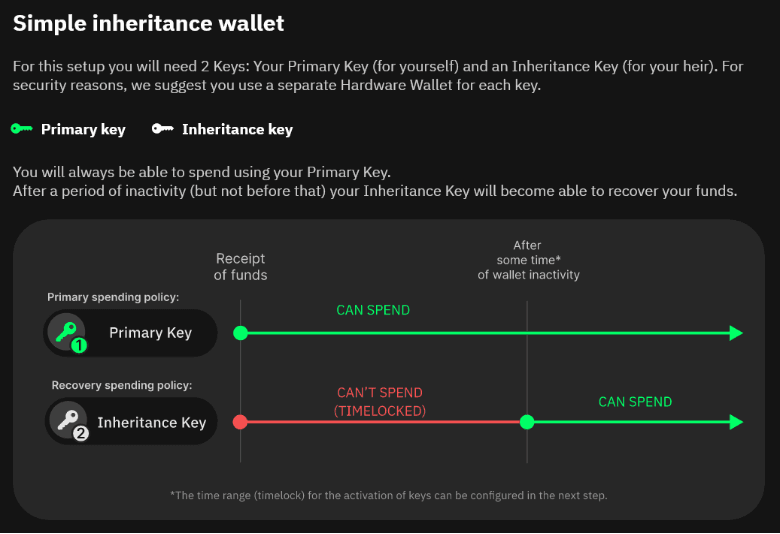
This is the most straightforward option and a good starting point for first-time planners.
You control your Bitcoin with your key during your lifetime. A second key is designated for your heir. Under the right conditions (for example, after a set time), your heir can use their key to access the funds.
Trade-offs
● ✔ Very easy to understand and explain to family
● ✔ Minimal setup and fewer moving parts
● ✖ Relies heavily on the heir keeping their key safe
● ✖ Less flexibility if circumstances change later
Best for
● Individuals or couples just starting to think about inheritance
● People with modest Bitcoin holdings
● Situations where there is one clear, trusted heir
Example
A working professional holding Bitcoin as long-term savings wants to ensure their spouse can access it without legal battles or technical complexity.
2. Expanding Multisig
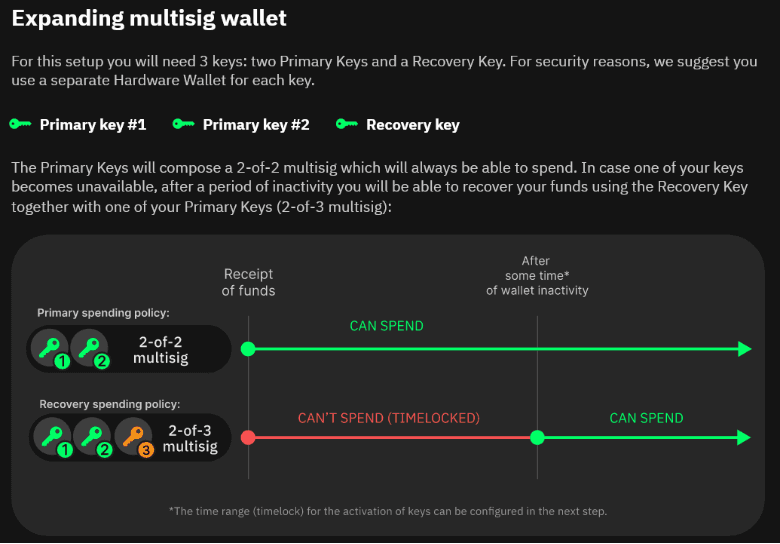
“Two keys to spend, plus one extra as backup.”
This option introduces an additional safety net.
Here, spending requires two keys, but there’s a third backup key in case one is lost. This improves resilience without making things overly complex.
Trade-offs
● ✔ Better protection against key loss
● ✔ More robust than a simple two-key setup
● ✖ Slightly more complex to manage
● ✖ Requires clearer documentation and planning
Best for
● People with larger Bitcoin holdings
● Families who want redundancy
● Users who are comfortable with a bit more setup for added safety
Example
A small business owner holds Bitcoin as part of long-term wealth and wants both inheritance protection and a fallback if a device is lost.
3. Build Your Own
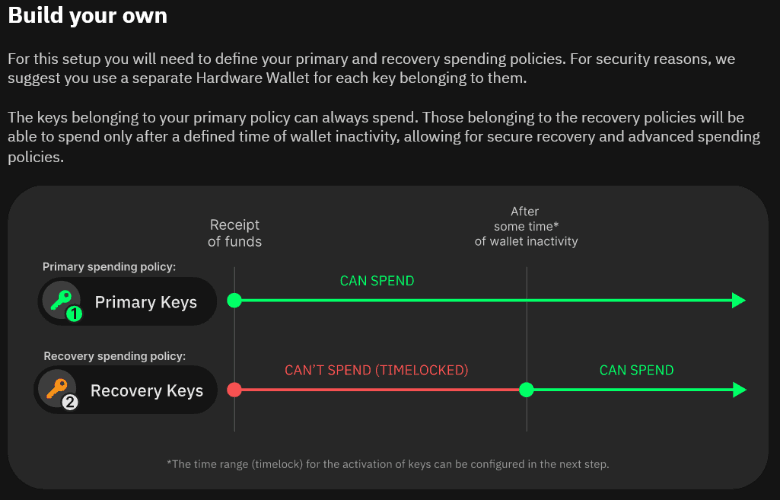
“Design a setup that fits your life.”
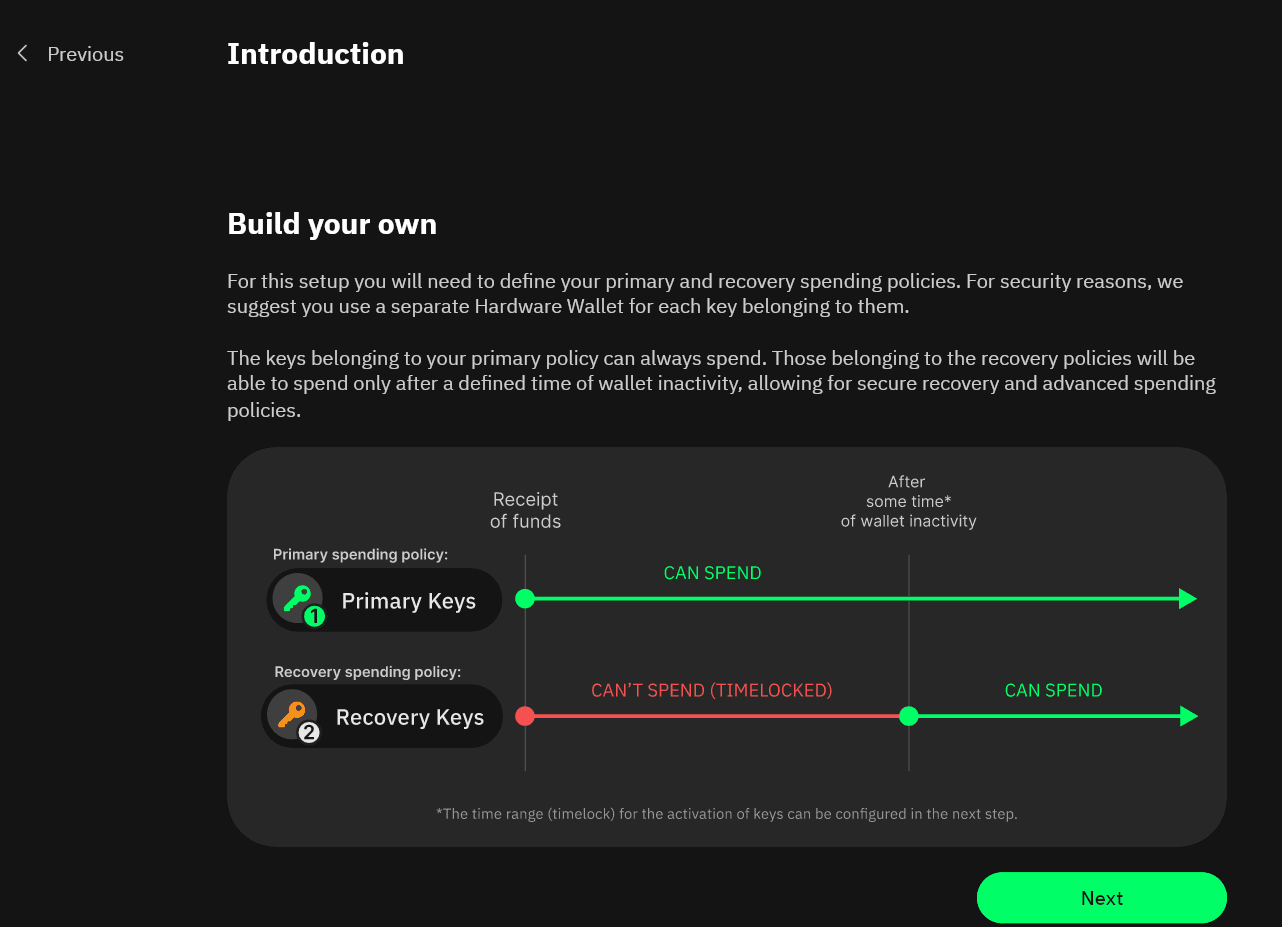
This is the most flexible—and most powerful—option.
You can customize who can access funds, under what conditions, and after what timeframes. It’s ideal for complex family structures or advanced planning.
Trade-offs
● ✔ Maximum flexibility and control
● ✔ Can handle complex inheritance scenarios
● ✖ Requires careful thought and documentation
● ✖ Not ideal for beginners
Best for
● High-net-worth individuals
● Families with multiple heirs
● Anyone working with advisors or trustees
Example
Someone wants their Bitcoin locked during their lifetime, released to children after a delay, and recoverable through a trusted third party if needed.